Are Feuerwanzen Dangerous? What to Know About These Harmless Insects
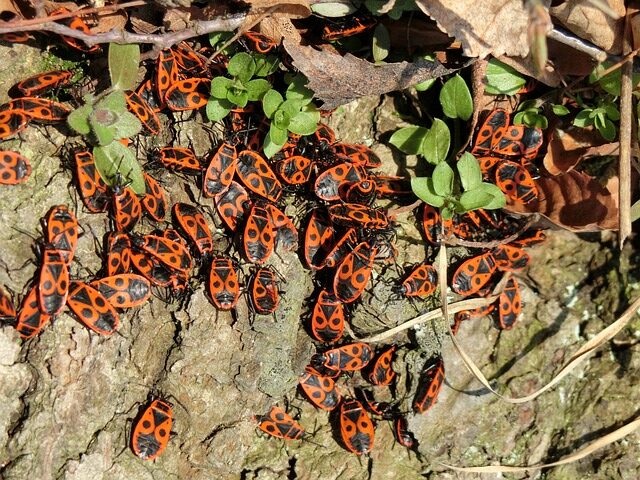
As the sun warms the earth and spring breathes new life into our surroundings, you might notice an increasing number of vibrant red and black insects congregating on pavements, window sills, and garden plants. These striking creatures, commonly known as firebugs or "Feuerwanzen" in German, often spark immediate concern due to their bold coloration and tendency to gather in large, sometimes almost intimidating, groups. Many people wonder, with a sense of apprehension, if these insects are dangerous, venomous, or harmful to their gardens. The short answer, which we will thoroughly explore, is a resounding no: firebugs are entirely harmless to humans, pets, and even most garden plants.
Understanding the Feuerwanze: More Bark Than Bite
Feuerwanzen, scientifically known as *Pyrrhocoris apterus* (the common firebug), belong to the family Pyrrhocoridae. They are easily identified by their distinctive red and black markings, which serve as a classic example of aposematic coloration – a warning signal to potential predators. Globally, there are over 300 species of firebugs, but the common firebug is the most frequently encountered in Central Europe. Its bright colors certainly make it noticeable, often leading to unfounded fears.
These fascinating insects emerge from their winter hideouts when temperatures rise, eager to bask in the sun and forage for food. Their communal nature is a key characteristic; they communicate using pheromones, which explains why you often find them clustered together in such significant numbers. While these large aggregations can appear alarming at first glance, they are merely social gatherings, not an invasion of dangerous pests. The appearance is indeed a trick, one that works remarkably well in nature. Predators tend to steer clear of firebugs because of their taste, not because they are inherently dangerous.
Debunking the "Feuerwanze Giftig" Myth: Are They Really Poisonous?
The most pressing question for many, often phrased as "Feuerwanze Giftig?", revolves around whether these insects are poisonous or venomous. Let's address this directly and emphatically: **Feuerwanzen are not poisonous, venomous, or dangerous to humans or animals.** They do not bite, sting, or transmit diseases.
Their primary defense mechanism, shared with many other true bugs (Heteroptera), is the release of a foul-tasting, odorous secretion when they feel threatened. This is where the misconception of "Feuerwanze giftig" often arises. Predators, after one unpleasant encounter, quickly learn to avoid these red and black bugs. However, for humans, this secretion is largely innocuous. While other stink bugs can emit a truly pungent odor that is highly irritating, the firebug's defensive spray is generally much milder and less offensive to our senses. It might smell slightly unpleasant if you were to intentionally provoke a bug and bring it close to your nose, but it poses no health risk whatsoever. You can pick them up, and even if they release their secretion, it will not harm your skin. Children can safely handle them without any risk of injury or poisoning.
For pets, similarly, there's no danger. If a curious dog or cat were to mouth a firebug, they might get a mouthful of bad-tasting bug, but it wouldn't be toxic or cause serious harm. The primary effect would be a quick lesson for the pet to leave firebugs alone in the future. This unpleasant taste is a purely deterrent mechanism, not a toxic one. For a more detailed look into this topic, you might find our related article,
Feuerwanze Giftig? Debunking the Red Bug Myth in Your Garden, particularly enlightening.
Feuerwanzen in Your Garden: Nuisance or Natural Helper?
Given their widespread presence, it's natural to wonder about the firebug's role in the garden ecosystem. Are they destructive pests like aphids or slugs, or do they offer any benefits?
Their Diet and Impact on Plants
Feuerwanzen primarily feed on fallen seeds, particularly those of mallow plants (Malvaceae), linden trees, and other deciduous trees. They are also known to suck sap from fallen fruits and occasionally from the juices of dead or living insects, such as mites and aphids. They utilize a specialized proboscis (a straw-like mouthpart) to pierce their food source, injecting saliva to dissolve it before sucking up the liquid.
Crucially, firebugs are **not considered garden pests** in the same league as destructive insects like the box tree moth or invasive snails. While they might occasionally feed on plant sap, they generally do not cause significant damage to healthy plants. Even in large numbers, their impact on your garden's flora is usually negligible. They are, at worst, an aesthetic "nuisance" when hundreds gather on a sunny patio or wall, rather than a threat to plant health. They are often even described as beneficial, as they contribute to the breakdown of organic matter by feeding on fallen seeds and can even help control some small pests.
Managing Firebug Presence
If you find their sheer numbers on your terrace or around specific plants bothersome, there are simple, non-harmful ways to manage them:
* **Remove Favorite Food Sources**: Firebugs are particularly attracted to mallow plants, especially their seeds and fruits. If you have mallow plants and wish to reduce firebug populations, promptly remove spent flower heads and dispose of them in your organic waste bin. Avoid composting these plant parts, as this would merely relocate the problem.
* **Physical Removal**: For large congregations on paved areas, a broom and dustpan are your best tools. Simply sweep them up and relocate them to a less visible part of the garden or a wilder area where they can continue their natural cycle without causing concern.
* **Water Spray**: A gentle spray of water can also encourage them to move along, though they may return if their preferred conditions persist.
It's important to reiterate that using pesticides is entirely unnecessary and counterproductive. Pesticides harm not only firebugs but also beneficial insects, pollinators, and can negatively impact the wider ecosystem. Since firebugs pose no threat, there's no ecological justification for their eradication. For more insights on their status in your garden, consider reading
Feuerwanzen in Your Garden: Pests or Just a Harmless Nuisance?
Peaceful Coexistence: Embracing These Harmless Garden Inhabitants
Ultimately, the firebug is a fascinating and completely harmless member of our natural world. Its bright colors and communal habits, while initially startling, are part of its unique charm and survival strategy. They contribute to the decomposition of organic matter, and by understanding their life cycle and behavior, we can easily coexist with them in our gardens and urban environments.
Instead of seeing them as a threat, we can appreciate firebugs for their role in the ecosystem and as another sign that spring and summer are in full swing. The next time you spot a group of these striking red and black insects, you can confidently dispel any fears of "Feuerwanze giftig" and simply enjoy their presence as a vibrant part of nature's tapestry.